

-
Product
-
-
Service Policy
-
-
Blog
-
Join Us
Service Support
Always adhere to providing customers with professional technical solutions and high-quality service experiences
Case study of an open pump in a diesel engine under emergency drainage conditions
Case study of the open pump operation in diesel engines under emergency drainage conditions
Pump Opening in Diesel Engines Its application scope is incredibly wide—today, the editor has listed several successful global cases of diesel engine-driven pumps!
Typical Application Case of Emergency Drainage Using an Open-Style Pump in Diesel Engines
In diesel engines, open pumps play a crucial role in various global emergency drainage scenarios thanks to their rapid response, independent power supply, and excellent resistance to contamination and wear. Below are real-world case studies from different fields:
I. Urban Flooding Emergency Response: The "Drainage Vanguard" After Heavy Rainfall
1. Extreme Rainfall and Drainage in Wuhan, China (July 2024)
Wuhan has experienced a once-in-a-century downpour, with waterlogging reaching depths of up to 1.8 meters in low-lying sections of Jianghan District, leaving three major roads impassable and trapping nearly 1,000 households. The emergency command center immediately dispatched four 600m³/h diesel-powered submersible pumps, each featuring a wide-channel design that effortlessly handles sediment particles as large as 50mm in diameter. Upon arrival at the scene, the equipment was operational within 10 minutes—no reliance on the disrupted municipal power grid was required. Over the next six hours, the four pump units worked continuously, successfully draining a total of 14,400 cubic meters of water and bringing the water levels back to a safe point, thereby restoring full road accessibility. The on-site supervisor remarked: "Traditional electric pumps would have been useless during this blackout, but the self-sufficient power of these diesel-driven pumps proved absolutely essential in turning the crisis around."
2. Bangkok, Thailand: Flood Prevention During the Rainy Season (2024)
Due to continuous rainfall causing reverse flooding along Bangkok's Chao Phraya River, 12 communities are at risk of being inundated. Local water authorities have activated 60 custom-designed diesel-powered mid-split pump units, specifically engineered to thrive in tropical, high-temperature environments—capable of operating continuously even in temperatures as high as 45°C. By deploying these pumps flexibly across the affected areas, officials are efficiently diverting floodwaters into the city’s backup reservoirs. Each unit can discharge up to 28,800 cubic meters of water per day, and within just three days, the situation was brought under control, preventing over 2,000 residential homes from being flooded. Notably, the mid-split design of the pump bodies allows for swift removal of aquatic weeds and debris from the river, extending maintenance intervals by an impressive 50% compared to conventional equipment.
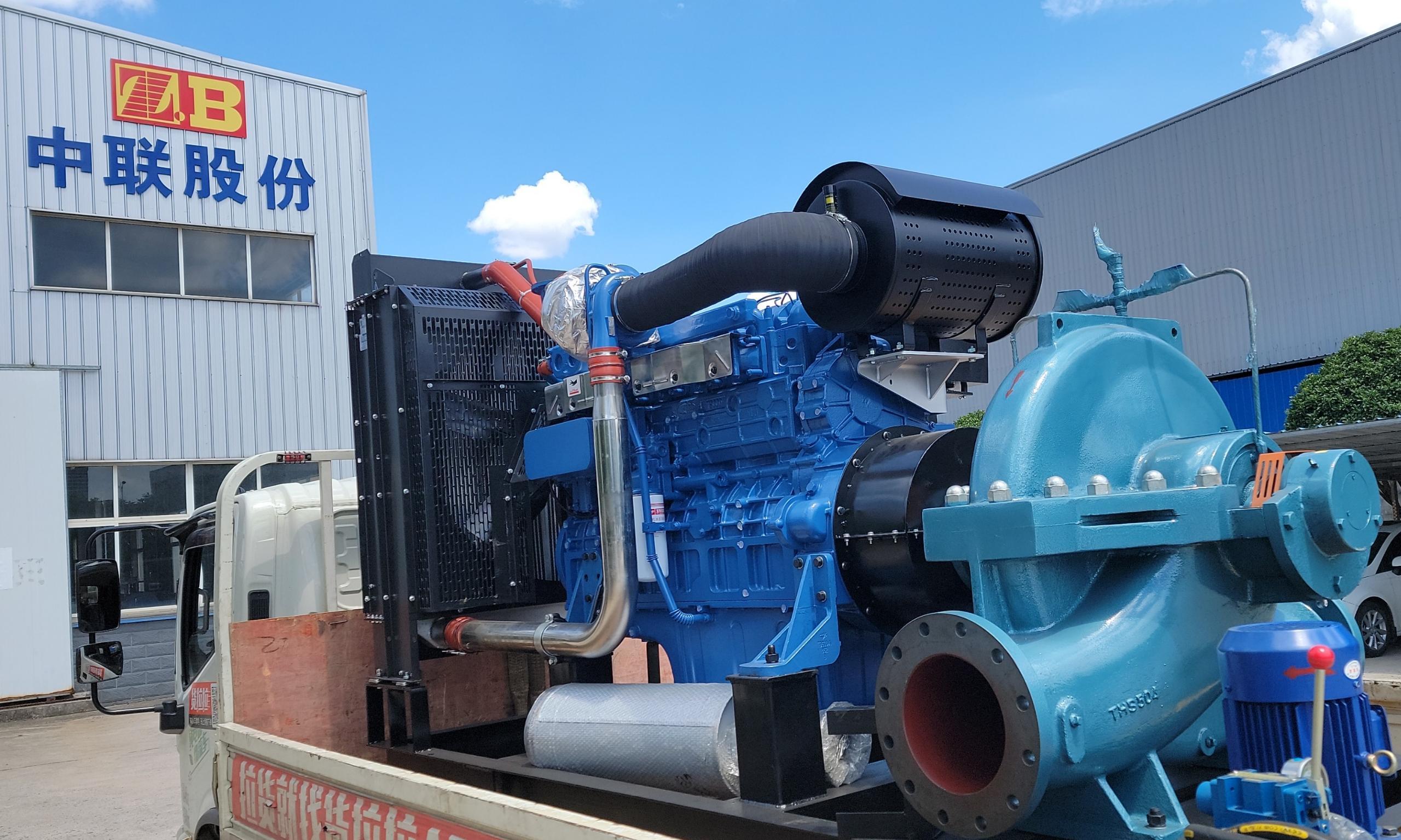
[Click on the image above to learn more about the models, specifications, and selection/quote options for in-line pumps used in diesel engines.]
II. Mine Emergency Drainage: The "Safety Barrier" Beneath Deep Wells
Emergency Response to Water Accumulation at Botswana's Copper Open-Pit Mine (June 2023)
In northern Botswana, Africa, heavy rainfall caused 10.3 million liters of water to accumulate in an open-pit copper mine, flooding the site to a depth of up to 8 meters and severely disrupting exploration operations. To tackle the crisis, the rescue team deployed a Sykes XH150 diesel-powered mid-section pump—equipped with an automatic priming system and capable of lifting water as high as 80 meters. Upon arrival at the scene, the pump was immediately put into action, efficiently discharging water at a rate of 120 liters per second. Over the course of 30 days, the team successfully cleared all the accumulated water, even managing to handle wastewater containing copper ore slag particles without a single clogging issue. As one mining engineer noted: "This pump features a wear-resistant ductile iron impeller, making it far better suited to the corrosive water conditions found in mines compared to conventional stainless steel pumps."
Drainage from an underground iron mine in Henan, China (April 2024)
Due to a sudden surge of underground seepage from an unseen river, the 300-meter-deep mine pit accumulated as much as 6,000 cubic meters of water within just 12 hours, posing a serious threat to the safety of the underground equipment. The emergency response team immediately activated two mobile diesel-powered centrifugal pumps, each capable of delivering 1,000 cubic meters per hour. These units feature a trailer-based design, allowing for rapid deployment even through the rugged mine tunnels. Over the course of 96 continuous hours, the pump system successfully drained the accumulated water at a combined flow rate of 2,000 cubic meters per hour. Thanks to their impressive capacity to handle solid particles as large as 76mm, the pumps effortlessly managed the debris and gravel mixed in the floodwater, preventing nearly 10 million yuan worth of equipment damage.
III. Post-Disaster Reconstruction Drainage: "Reconstruction Support" Amidst the Rubble
Post-Hurricane Florida Flood Drainage in the U.S. (2023)
After Hurricane Ian, the southwestern coastal region of Florida was left submerged, with floodwaters reaching up to 2.5 meters deep in several industrial parks. Rescue teams deployed 15 high-capacity diesel-powered pumps—equipment that meets NFPA fire safety standards and operates 30% faster than electric pumps—to swiftly begin draining the water. The pump units feature an explosion-proof design, perfectly suited for the challenging environments found in industrial parks. Each machine can pump out 3,000 cubic meters of water per hour, enabling the completion of drainage tasks across eight industrial parks within just 10 days—and buying critical time for businesses to resume operations. Meanwhile, as heavy rains struck again, these robust pumps demonstrated unparalleled reliability, maintaining continuous operation for 2,000 hours without any need for manual intervention, ensuring uninterrupted water removal even in the absence of staff.
Drainage After the Sulawesi Earthquake in Indonesia (2024)
The earthquake triggered a landslide that blocked a river channel, creating a temporary barrier lake and posing a threat to three downstream villages. Rescue teams deployed custom-designed diesel-powered double-suction pumps from Zoomlion Pump Industry, whose wear-resistant sealing system has been optimized specifically for the high-silt content of Southeast Asian water conditions. Three pump units operated in tandem, efficiently diverting the lake’s water at a combined flow rate of 1,800 m³/h, successfully lowering the water level by 1.2 meters within 72 hours and eliminating the risk of a potential dam breach. Local disaster relief authorities praised the equipment, noting, "This device can quickly adapt to remote, off-grid environments, while its open-type design simplifies maintenance—making it especially well-suited for the challenging post-disaster scenarios."
Diesel pumps are characterized by high flow rates, stable performance, and a simple structure, making them suitable for use in a wide range of operational conditions.
Related News

Hotline:
+86 0731-88632200
Export Trade/Technical Support:
+86 153-4831-2290
Head Office Email:
zoomlian@yeah.net
No. 210, Huanbao Zhong Road, Yuhua District, Changsha City, Hunan Province, Leowoju Wisdom Valley Building B, 8th Floor
Quick Navigation


Hot Products
Online Consultation
Powered by:www.300.cn Changsha SEO