

-
Product
-
-
Service Policy
-
-
Blog
-
Join Us
Service Support
Always adhere to providing customers with professional technical solutions and high-quality service experiences
Why does everyone recommend using self-balancing multistage pumps?
Why does everyone recommend using self-balancing multistage pumps?
In the fields of industrial fluid transportation, municipal water supply, and mine drainage, when it comes to "high-efficiency and energy-saving centrifugal pumps," practitioners almost always prioritize recommending self-balancing multistage pumps. Unlike traditional multistage pumps that require frequent maintenance and have poor operational stability, self-balancing multistage pumps, with their innovative structural design and performance advantages, have become the "preferred equipment" in many industries. What exactly makes them so widely recognized? We have distilled three core reasons from practical application scenarios:
1. Say goodbye to frequent maintenance, with operational costs reduced by 30%
The biggest problem with traditional multistage pumps is that the rotor axial force during operation relies on a balance disc for adjustment. After long-term use, the balance disc wears severely, requiring regular shutdowns for part replacement, and wear can cause pump body leakage and efficiency decline. The self-balancing multistage pump fundamentally offsets axial force through its patented "symmetrical impeller reverse arrangement" design, completely eliminating vulnerable parts like balance discs and balance sleeves.
A case from a large steel plant shows that before switching to self-balancing multistage pumps, traditional pumps needed shutdown maintenance every 3 months, each maintenance took 2 days, and annual part replacement costs exceeded 50,000 yuan; after switching, the equipment ran continuously for 18 months without disassembly, maintenance workload decreased by 60%, and annual maintenance costs dropped below 15,000 yuan. For enterprises requiring 24-hour continuous operation, "less downtime and less maintenance" means higher production efficiency, which is the most direct advantage of self-balancing multistage pumps.
2. Adapt to multiple scenarios with full performance stability
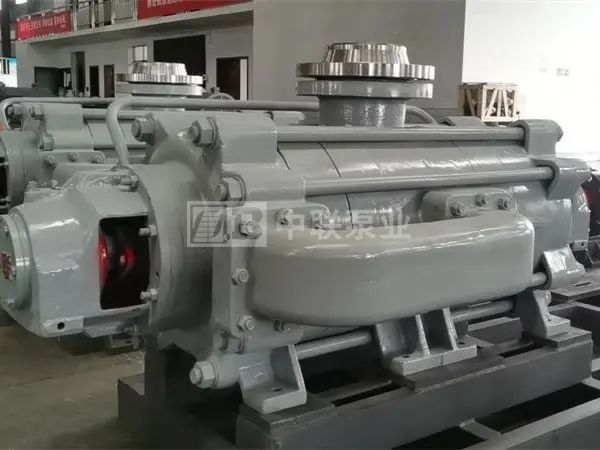
[Click the image above to learn more about the models, parameters, and details of self-balancing multistage pumps]
Whether transporting impurity-containing mine wastewater or boiler feedwater under high pressure, self-balancing multistage pumps maintain excellent adaptability. Their core advantages include:
Wide flow range coverage: Through modular design, a single pump can flexibly adjust flow from 5 to 1000 m³/h and head from 50 to 2800 m without changing equipment, adapting to different working conditions;
Stronger cavitation resistance: The inlet section uses a double-suction impeller structure, effectively reducing fluid inlet velocity. The net positive suction head (NPSH) is 20%-30% lower than traditional pumps, allowing stable operation in special environments such as high altitude and low water temperature;
Flexible material customization: Flow-through parts can be made from cast iron, stainless steel, duplex steel, and other materials. For corrosive media like acidic wastewater and high-temperature oils, corrosion-resistant coatings can be customized, extending service life by 2-3 times compared to ordinary pumps.
A municipal water supply company experienced unstable pipeline pressure due to traditional pumps failing to adapt to flow fluctuations during morning and evening peak water usage. After switching to self-balancing multistage pumps, the equipment automatically adjusted speed based on real-time water usage, controlling pipeline pressure fluctuations within ±0.02 MPa, significantly improving residents' water usage experience.
3. More significant energy savings and visible long-term benefits
Under the "dual carbon" goals, energy efficiency has become an important criterion for enterprise equipment selection. Self-balancing multistage pumps achieve energy savings through two main designs: first, by eliminating the balance disc, energy loss caused by friction is avoided, improving pump efficiency by 5%-8% compared to traditional pumps; second, when paired with a variable frequency control system, the motor speed adjusts in real time according to load demand, rather than running at full load as traditional pumps do, achieving energy savings of over 30% under low flow conditions.
For example, a chemical plant's circulating water system originally used 4 traditional multistage pumps with a daily electricity consumption of about 8,000 kWh; after replacing them with 3 self-balancing multistage pumps (with variable frequency), daily electricity consumption dropped to 5,200 kWh, saving over 900,000 yuan annually in electricity costs. Calculated over a 10-year equipment lifespan, electricity savings alone cover more than 1.5 times the initial equipment investment, demonstrating significant long-term economic benefits.
From reducing maintenance hassles to adapting to complex working conditions and achieving long-term energy savings, every advantage of self-balancing multistage pumps precisely addresses industry pain points. Today, they are not just "recommended equipment" but have become the "indispensable" core of fluid transportation in chemical, metallurgical, municipal, and mining fields. If your enterprise faces frequent maintenance, high energy consumption, and poor adaptability with traditional pumps, consider self-balancing multistage pumps — they bring not only equipment upgrades but also dual improvements in production efficiency and economic benefits.
Related News

Hotline:
+86 0731-88632200
Export Trade/Technical Support:
+86 153-4831-2290
Head Office Email:
zoomlian@yeah.net
No. 210, Huanbao Zhong Road, Yuhua District, Changsha City, Hunan Province, Leowoju Wisdom Valley Building B, 8th Floor
Quick Navigation


Hot Products
Online Consultation
Powered by:www.300.cn Changsha SEO