

-
Product
-
-
Service Policy
-
-
Blog
-
Join Us

Service Support
Always adhere to providing customers with professional technical solutions and high-quality service experiences
Daily Maintenance and Servicing Methods for Power Plant Condensate Pumps
Daily Maintenance and Servicing Methods for Power Plant Condensate Pumps
Condensate pump It is the core equipment of the power plant’s steam-water circulation system. The primary objectives of daily maintenance are to ensure continuous and stable operation of the equipment, prevent cavitation and component wear, and extend its service life. The specific methods can be categorized into four major modules: routine inspections during operation, regular maintenance, shutdown maintenance, and fault prevention.
I. Real-time inspection during operation (must be performed daily)
1. Parameter Monitoring
Record inlet and outlet pressures, flow rates, motor currents, and temperatures at scheduled intervals to ensure that all parameters remain within their rated ranges. If significant pressure fluctuations or an abnormal increase in current are detected, immediately investigate whether the inlet filter is clogged, cavitation has occurred in the pump body, or there is a valve malfunction.
Monitor the temperatures of the pump body and bearings. The temperature rise of the bearings must not exceed 40℃ above the ambient temperature. If the temperature is too high, check whether the lubrication or cooling system is malfunctioning.
2. Vibration and Noise Inspection
Use a vibration analyzer to measure the vibration levels of the pump shaft and motor. If the measured values exceed the specified limits, stop the machine immediately to inspect the impeller balance, coupling concentricity, or bearing wear condition.
Listen to the operating sound of the pump body. If you hear a sharp, unusual noise, it could be cavitation or loose components—address the issue promptly.
3. Sealing Condition Check
◦ Mechanical seal: Allows for a slight drip (no more than 5 drops per minute). If the drip rate exceeds this limit, check for wear on the sealing surfaces or failure of the spring. Dry running is strictly prohibited.
◦ Packing seal: Adjust the tightness of the packing gland so that approximately 10–20 drops of condensed water seep out per minute. This ensures a proper sealing effect while also allowing the seeping water to cool the packing.
4. Clean the inlet filter
Regularly check the differential pressure across the inlet filter. If the differential pressure exceeds 0.05 MPa, stop the machine and clean out any debris from the filter to prevent cavitation caused by insufficient water intake.
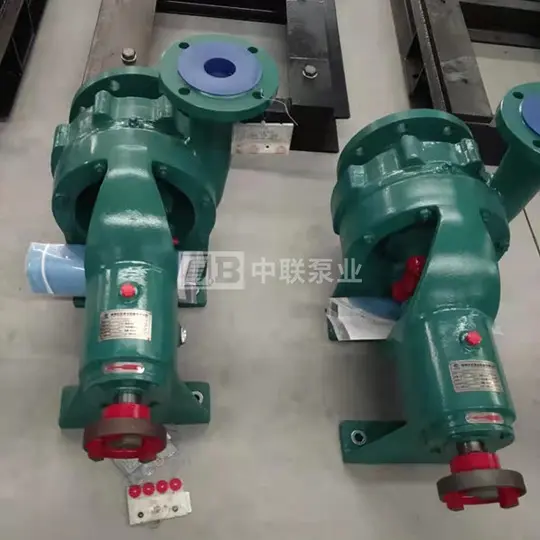
[For more information on condensate pump models, specifications, selection guidelines, and quotations, click the image above to learn more.]
II. Regular Maintenance (Weekly / Monthly / Quarterly)
1. Lubrication System Maintenance
◦ Check the oil level and oil quality of the bearing lubricant (grease) weekly. The oil level must be maintained between 1/2 and 2/3 of the oil window. Replace the oil immediately if it becomes emulsified or turns black.
◦ Lubricate rolling bearings once a month with grease, using an amount sufficient to fill 1/3 to 1/2 of the bearing cavity, and avoid over-lubrication that could cause excessive temperature rise in the bearings. For sliding bearings, change the oil once every quarter, depending on the oil quality.
2. Cooling System Maintenance
Check whether the bearing cooling water passages are unobstructed, ensuring that the cooling water pressure and flow rate meet the specified standards to prevent bearing burnout due to insufficient cooling. Regularly clean the cooling water lines to remove scale and impurities.
3. Coupling and Fastener Inspection
Monthly check whether the elastic pads of the coupling are aged or damaged and whether the bolts are loose. If any issues are found, replace or tighten them promptly to ensure that the coaxiality error remains within 0.1 mm.
Check the tightness of the pump base anchor bolts and the flange connection bolts at the inlet and outlet to prevent loosening during operation.
III. Maintenance and Upkeep After Shutdown (Planned Shutdown / Long-Term Standby)
1. Short-term shutdown (several days)
After shutdown, turn the pump shaft manually 2-3 times to prevent shaft bending; maintain a slight leakage in the seal chamber to prevent the sealing surfaces from drying out and sticking together.
2. Long-term shutdown (over 15 days)
Drain the condensate from the pump body to prevent low-temperature freezing from cracking the pump body or causing corrosion of its components; apply anti-rust grease to the flow-through parts.
Manually turn the shaft once a week, rotating it 180° each time to prevent deformation of the shaft system.
Close the inlet and outlet valves and take appropriate measures to protect the equipment from dust and moisture.
3. Component Inspection
Regularly disassemble and inspect the wear condition of vulnerable components such as impellers, pump shafts, and wear rings. If the clearance between wear rings exceeds twice the design value, they must be replaced promptly to prevent efficiency loss.
IV. Fault Prevention and Ledger Management
1. Establish an equipment maintenance ledger to meticulously record inspection data, maintenance schedules, and replacement details for wear-and-tear parts. By analyzing data trends, proactively predict potential equipment failures in advance.
2. Regularly apply anti-corrosion treatment to the pump body, especially to components that come into contact with condensate, to prevent electrochemical corrosion.
3. During maintenance, strictly adhere to the power-off and tag-out procedure to prevent accidental operations that could lead to safety incidents.
Related News

Hotline:
+86 0731-88632200
Export Trade/Technical Support:
+86 153-4831-2290
Head Office Email:
zoomlian@yeah.net
No. 210, Huanbao Zhong Road, Yuhua District, Changsha City, Hunan Province, Leowoju Wisdom Valley Building B, 8th Floor
Quick Navigation


Hot Products
Online Consultation
Powered by:www.300.cn Changsha SEO