

-
Product
-
-
Service Policy
-
-
Blog
-
Join Us
Service Support
Always adhere to providing customers with professional technical solutions and high-quality service experiences
What are the differences in performance parameters between racing bearings and ordinary bearings?
What are the differences in performance parameters between racing bearings and ordinary bearings?
Sailong Bearing Differences in Performance Parameters Between This Bearing and a Standard Bearing
1. Material parameters: Saierlong bearings are made of a special polymer material with no metallic components; most conventional bearings are made of metals such as copper alloys and Babbitt alloys, which are highly rigid but have poor corrosion resistance and wear resistance.
2. Lubrication parameters: Sailong bearings can be lubricated with water and have an extremely low coefficient of friction (only 0.051), eliminating the need for oil or lubricants. Conventional bearings rely on oil or lubricants for lubrication, have a higher coefficient of friction than Sailong bearings, and require regular replenishment of grease or oil.
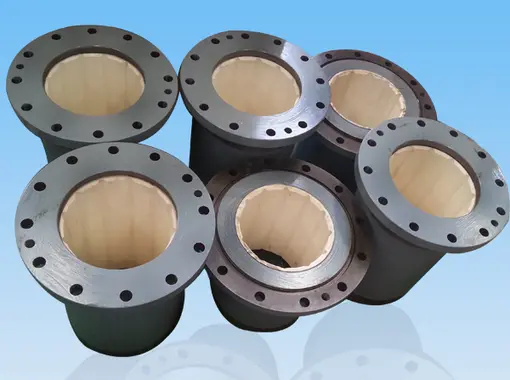
3. Wear Resistance and Service Life Parameters: The wear resistance of Sailong bearings is 100 times that of copper alloys (a commonly used material for conventional bearings). They can operate continuously for tens of thousands of hours in sand-laden water without significant wear, and their service life far exceeds that of conventional bearings. In contrast, conventional bearings are prone to wear and corrosion in environments containing silt or seawater, have a short service life, and require frequent replacement.
4. Parameters for Adapting to Extreme Operating Conditions: Sailong bearings can run dry for 1–2 minutes (in scenarios involving sudden water supply interruptions), and are resistant to acids and alkalis as well as vibration-resistant (capable of absorbing vibrational energy). By contrast, conventional bearings lack the ability to run dry; they are rigid but not vibration-resistant, easily corroded by acids, alkalis, and seawater, and cannot withstand harsh operating conditions.
Related News

Hotline:
+86 0731-88632200
Export Trade/Technical Support:
+86 153-4831-2290
Head Office Email:
zoomlian@yeah.net
No. 210, Huanbao Zhong Road, Yuhua District, Changsha City, Hunan Province, Leowoju Wisdom Valley Building B, 8th Floor
Quick Navigation


Hot Products
Online Consultation
Powered by:www.300.cn Changsha SEO