

-
Product
-
-
Service Policy
-
-
Blog
-
Join Us

Service Support
Always adhere to providing customers with professional technical solutions and high-quality service experiences
How do you select a double-suction, center-split pump for municipal water supply and drainage systems?
How should municipal water supply and drainage systems select a double-suction, center-split pump?
For municipal water supply and drainage Double-suction mid-section pump The core selection criteria revolve around four key dimensions: water supply requirements, operating conditions, installation environment, and compliance requirements. The selection process takes into account high flow rates, low energy consumption, stability, and ease of subsequent maintenance. The steps are clear and closely aligned with the actual application scenarios in municipal engineering projects. The specific selection procedure and key points are as follows:
1. First, determine the core process parameters—this is the foundation for equipment selection.
Municipal water supply and drainage systems are divided into two categories: water supply (including water treatment plants and pressurization of pipeline networks) and drainage and flood control (including rainwater pumping stations and sewage interception). First, accurately calculate the key parameters to avoid selecting equipment that is either oversized or undersized.
Flow rate (Q): Calculated based on the maximum daily and hourly water consumption or drainage volume as specified in the municipal planning. For water supply systems, a reserve margin of 10%–20% should be provided; for drainage systems, the calculation should be based on the return period of heavy rainfall events (typically 3–5 years, with 10 years for key areas). Units: m³/h.
Head (H): Calculated based on the actual head loss in the pipeline network, the elevation difference in terrain, and the free head at the end point. For water supply pressurization, the pressure at the most unfavorable point in the pipeline network must be considered (typically 0.28–0.4 MPa). For drainage applications, the difference between the lowest and highest water levels in the pump station sump should be taken into account. Unit: m.
Medium and Temperature: The feedwater should be clean tap water (normal temperature ≤ 40℃). If the discharge is rainwater, it can be selected as clear water; however, if it contains a small amount of silt or sand, the sand content must be indicated to prevent wear on the pump body.
Rotational speed (n): Prioritize lower rotational speeds (≤1450 rpm). Municipal engineering projects have high requirements for noise and vibration; pumps operating at lower speeds are more stable and have a longer service life.
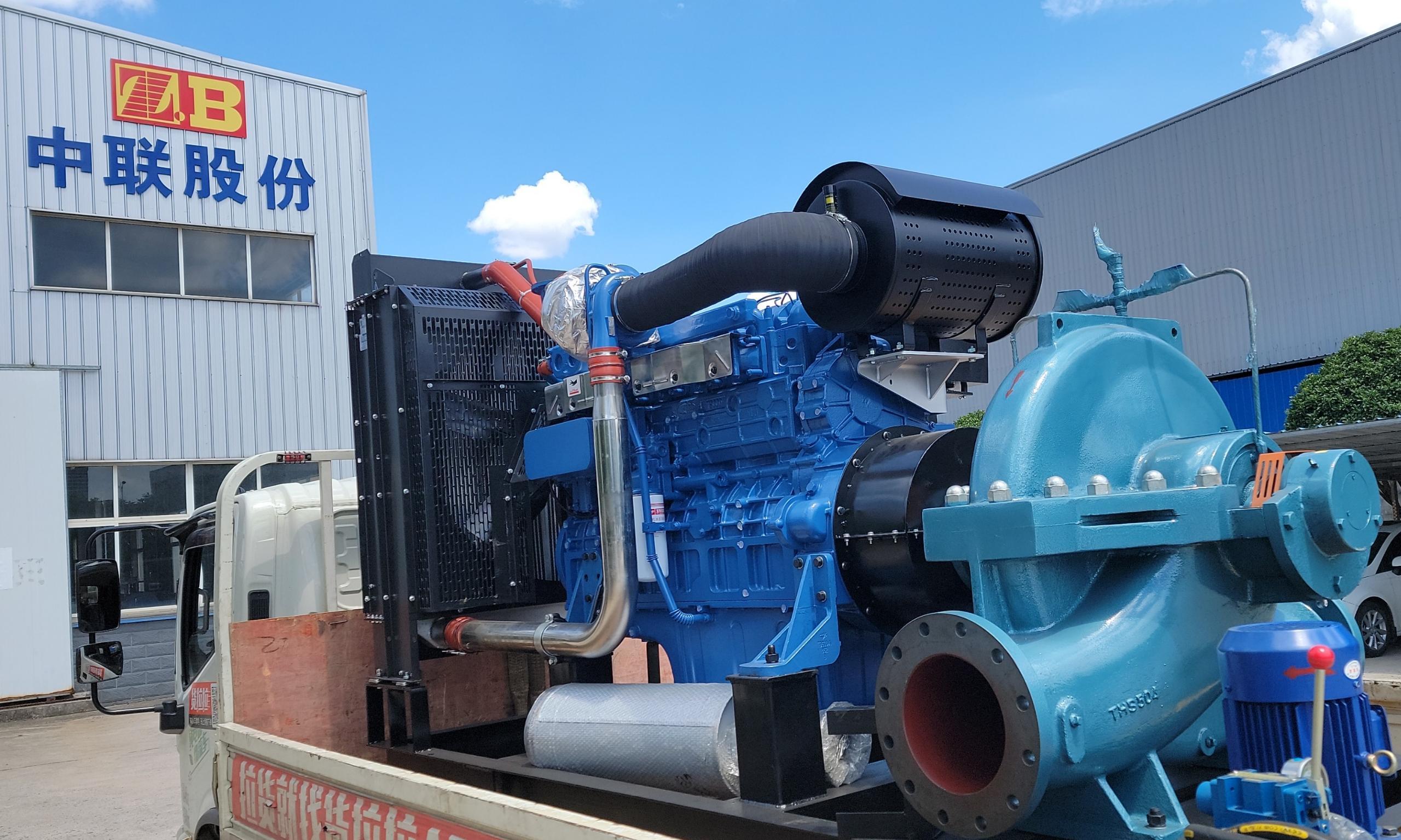
[For more information on single-stage double-suction split-case pump models, specifications, selection guidelines, and quotation options, please click the image above to learn more.]
II. Key Selection Requirements for Matching Municipal Operating Conditions
Municipal engineering projects have stringent requirements for pump reliability, energy efficiency, and installation compatibility; therefore, careful and targeted selection is essential during the equipment selection process.
Material Selection: For water supply pumps, the flow components should preferably be made of cast iron HT250/300 (for conventional operating conditions) or 304 stainless steel (for high-standard drinking water applications). Rainwater drainage pumps can use cast iron; however, if they will come into contact with mildly corrosive water bodies, consider using cast steel or stainless steel instead.
Structural configuration: Municipal pump stations typically employ horizontal, double-suction, mid-split pumps. For pump stations with limited installation space, vertical pumps can be considered. Mid-split pump bodies are preferred, as they allow for maintenance without having to dismantle the inlet and outlet pipelines, making them well-suited for municipal engineering applications that require uninterrupted water supply during repairs.
Energy Saving and Efficiency: It is essential to select pumps with national-level energy efficiency, paired with high-efficiency motors (YE3/YE4 series). For municipal projects with large flow rates and 24-hour operation, high energy efficiency can significantly reduce subsequent operating costs.
Cavitation Performance: Select the pump based on NPSHr (Net Positive Suction Head Required). The actual available net positive suction head (NPSHa) in the system must be 1–2 meters greater than the NPSHr. In pumping stations, it is essential to maintain a stable water level in the suction sump to prevent cavitation-induced pump failures.
Auxiliary features: The municipal pump must be equipped with variable-frequency speed control (to cope with fluctuations in pipeline flow and pressure). It should also be fitted with a pressure gauge, a vacuum gauge, a check valve, and a flexible connector. For drainage pumps, an emergency start-up function should be considered.
3. Refine the selection based on the installation scenario.
Clear water transmission from the water plant: Choose high flow rate, low head. Horizontal double-suction split-case pump Prioritize models that can operate in parallel for easy adjustment of water supply.
Municipal pipeline pressurization pump stations: Select equipment based on the pressure requirements of each pipeline zone, and match it with a variable-frequency drive unit. The pump head must be sufficient to cover the most unfavorable point in each zone.
Rainwater drainage pump stations: Select equipment based on the designed drainage flow rate and head, taking into account the capacity for short-term overload operation during the rainy season. The pump body must be resistant to blockage (with widened impeller passages).
Community/Municipal Water Supply System: Select a compact, horizontal, double-suction, mid-open pump based on the water supply capacity, taking into account both installation space and noise control.
IV. Compliance and After-Sales—A Must-Read for Municipal Engineering Projects
The selected pump must comply with GB/T 3216-2016 “Hydraulic Performance Acceptance Tests for Rotary Power Pumps” and the design specifications for municipal water supply and drainage projects. Priority should be given to brand models with proven track records in municipal engineering projects.
Verify the inlet and outlet diameters and installation dimensions of the pump, ensuring compatibility with the foundation and pipeline layout of the municipal pumping station to minimize construction and renovation costs.
Confirm the manufacturer’s after-sales capabilities: municipal pumps must ensure the supply of wear parts (seals, impellers) and be able to provide on-site installation, commissioning, and maintenance services.
V. Key Points for Selecting the Right Model and Avoiding Pitfalls
Don't blindly pursue high head or high flow rate. Calculate based on actual operating conditions—reserving excessive margin can lead to prolonged low-efficiency operation of the pump and increase energy consumption.
Drainage pumps should not be mixed with water supply pumps. Rainwater drainage pumps need to take into account short-term overload capacity, while water supply pumps place greater emphasis on operational stability and compatibility with water quality.
Avoid overlooking installation space—municipal pump stations are often located underground or partially underground, so it’s essential to verify the pump’s external dimensions and maintenance access space in advance.
VI. Summary of Quick Selection Steps
Calculate the actual flow rate plus head (including margin), and determine the medium and temperature.
Select the structural type (horizontal / vertical) + material + rotational speed based on operating conditions.
Select models that meet the Class 1 energy efficiency standard, are compatible with inverter technology, and have qualified cavitation performance.
Verify installation dimensions, compliance, and after-sales support;
The manufacturer provides hydraulic performance curves to confirm that the pump meets the required specifications for parameters such as efficiency at the operating point and net positive suction head (NPSH).
Related News

Hotline:
+86 0731-88632200
Export Trade/Technical Support:
+86 153-4831-2290
Head Office Email:
zoomlian@yeah.net
No. 210, Huanbao Zhong Road, Yuhua District, Changsha City, Hunan Province, Leowoju Wisdom Valley Building B, 8th Floor
Quick Navigation


Hot Products
Online Consultation
Powered by:www.300.cn Changsha SEO