

-
Product
-
-
Service Policy
-
-
Blog
-
Join Us
Having 26 series -312 varieties - over 1000 pump models
Focused on water pump research and development manufacturing for 36 years
Free training for operation and maintenance personnel/free installation guidance/free provision of installation drawings
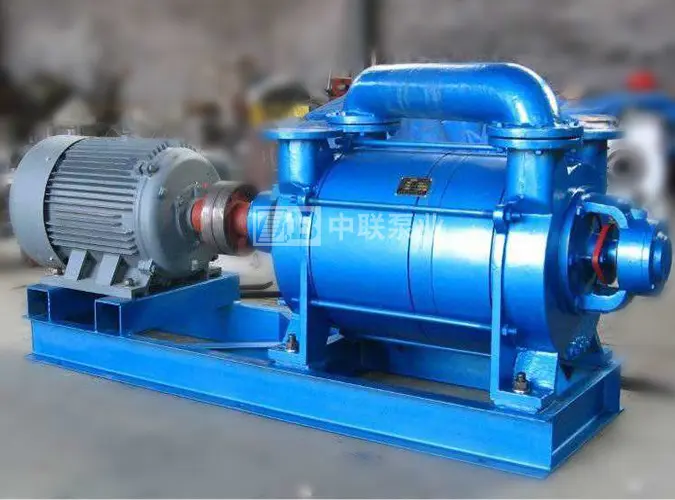
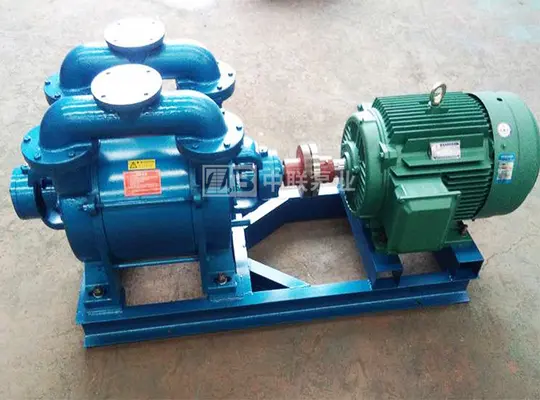
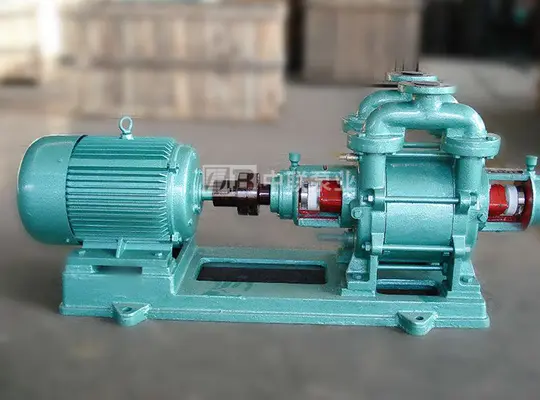
SK Series Liquid Ring Vacuum Pump Unit
Pumping rate: 0.8–120 m³/min
Vacuum degree: -0.089 ~ -0.097 MPa
Power: 2.2-185kw
Rotational speed: 490-1440r/min
Water consumption: 8-260i/min
Price: 21,000–21,500
The SK-type liquid-ring vacuum pump and compressor are used to extract or compress gases—specifically, non-corrosive gases that are insoluble in water and free of solid particles—thereby creating a vacuum or pressure within a closed container to meet the requirements of industrial processes. A small amount of liquid is permissible in the gas being drawn in or compressed.
Hotline:
Vacuum pump
Horizontal Single-Stage Fire Pump
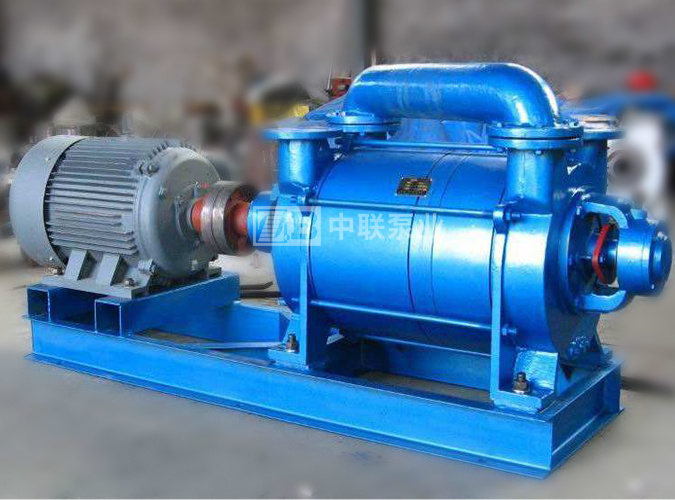
Product Parameters
Meaning of Model Designations for SK Series Liquid Ring Vacuum Pump Units:
SK-20
SK——Water Ring Vacuum pump
20——Maximum air flow rate is 20 m³/min
Main technical parameters of the SK series liquid-ring vacuum pump unit:
Model number | Inhalation volume (m³/min) | Extreme vacuum | Power (kilowatts) | Rotational speed | Compressor | Caliber | Water consumption | |||||
Maximum | The vacuum level is -450 mmHg. | mmHg | MPa | Vacuum pump | Compressor | |||||||
Enter | Out | |||||||||||
SK-1.5 | 1.5 | 1.35 | -680 | -0.091 | 3 | 4 | 1450 | 0-1 | 70 | 70 | 10~15 | |
SK-3 | 3 | 2.8 | -710 | -0.093 | 5.5 | 7.5 | 1450 | 0-1 | 70 | 70 | 15~20 | |
SK-6 | 6 | 5.4 | -710 | -0.093 | 11 | 15 | 1450 | 0-1 | 80 | 80 | 20~30 | |
SK-9 | 9 | 8.1 | -710 | -0.093 | 15 | 22 | 970 | 0-1 | 80 | 80 | 30~40 | |
SK-12 | 12 | 11 | -710 | -0.093 | 18.5 | 30 | 970 | 0-1 | 80 | 80 | 40~50 | |
SK-15 | 15 | 13.5 | -710 | -0.093 | 30 | 45 | 970 | 0-1 | 80 | 80 | 50~60 | |
SK-20 | 20 | 18 | -710 | -0.093 | 37 | 55 | 740 | 0-1 | 150 | 150 | 60~80 | |
SK-30 | 30 | 28 | -710 | -0.093 | 55 | 75 | 740 | 0-1 | 150 | 150 | 70~100 | |
SK-42 | 42 | 37.2 | -710 | -0.093 | 75 | - | 740 | - | 150 | 150 | 95~130 | |
SK-60 | 60 | 54 | -710 | -0.093 | 95 | - | 590 | - | 250 | 250 | 140~180 | |
SK-85 | 85 | 76.5 | -710 | -0.093 | 132 | - | 590 | - | 250 | 250 | 180~220 | |
SK-120 | 120 | 110 | -710 | -0.093 | 185 | - | 590 | - | 300 | 300 | 220~260 | |
Note: The data listed in the table were obtained under the following conditions:
1. Atmospheric pressure: 0.1013 MPa (760 mmHg)
2. Inlet water temperature: 15℃
3. Inhaled air temperature: 20℃
4. Relative air humidity: 70%
5. Performance allowable deviation: ±10%
Working principle of the SK series liquid-ring vacuum pump unit:
As shown in Figure (1), the SK-type liquid-ring vacuum unit features an impeller 3 that is eccentrically mounted inside the pump body 2. As the impeller 3 rotates, the water, under the influence of centrifugal force, forms a rotating liquid ring 5 along the inner wall of the pump body. The inner surface of the upper part of the liquid ring is tangent to the hub and rotates in the direction indicated by the arrow. During the first half of the rotation, the inner surface of the liquid ring gradually moves away from the hub, thereby creating enclosed spaces between the impeller blades and the liquid ring. As the impeller continues to rotate, these spaces gradually expand, causing the gas pressure within them to decrease and allowing gas to be drawn into the spaces. In the second half of the rotation, the inner surface of the liquid ring gradually approaches the hub, reducing the volume of the spaces between the blades and increasing the gas pressure within these spaces. Once the gas pressure exceeds the outlet pressure, the gas trapped between the blades is expelled through the exhaust port. Thus, with each full rotation of the impeller, the spaces between the blades alternately draw in and expel gas. A large number of such spaces operate continuously, enabling the pump to continuously pump or compress gas. Since the SK-type liquid-ring vacuum unit generates heat during operation, the working liquid ring tends to heat up. At the same time, some of the water and gas are discharged together. Therefore, during operation, it is essential to continuously supply water to the pump for cooling and replenishing the water consumed within the pump, thus ensuring that the pump operates as required. When the gas exhausted by the SK-type liquid-ring vacuum pump is no longer utilized, a gas-water separator (which can be constructed using a simple water tank) is connected to the pump’s exhaust end. After wastewater and some of the carried water enter the gas-water separator, they undergo separation: the gas is discharged through the exhaust pipe, while the remaining water is returned via a return pipe back into the pump for continued use. As the pump runs for longer periods, the temperature of the working water will steadily rise. At this point, it becomes necessary to supply a certain amount of cold water (tap water) from the water supply source of the gas-water separator to lower the working water temperature, thereby ensuring that the SK-type liquid-ring vacuum pump meets its specified technical requirements and performance standards.
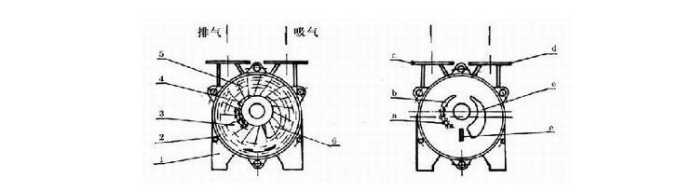

1. End cover 2. Pump body 3. Impeller 4. Exhaust port 5. Water ring 6. Suction port a. Rubber ball port b. Pump body c. Exhaust pipe d. Suction pipe e. Suction port f. Inlet water When the SK-type liquid-ring vacuum pump is used as a compressor, a gas-water separator is connected to the pump’s exhaust port. After the gas-water mixture enters the gas-water separator, it automatically separates: the gas is conveyed through the exhaust pipe to the required system, while the working water is discharged automatically via an overflow switch. During gas compression, the working water tends to heat up significantly. As the water exits from the SK-type liquid-ring vacuum pump, its temperature rises considerably. Therefore, cold water must be continuously supplied to the bottom of the gas-water separator to replenish the hot water that has been discharged and simultaneously serve as a cooling agent, preventing the working water temperature from becoming excessively high. This ensures that the compressor maintains optimal performance, meets technical specifications, and satisfies process requirements.
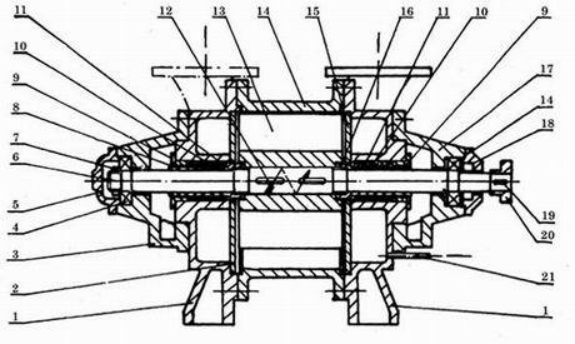
1. End cover 2. Exhaust disc 3. Rear bearing housing 4. Bearing 5. Rear bearing cap 6. Shaft 7. Round nut 8. Rear shaft sleeve 9. Packing gland 10. Packing ring 11. Packing material 12. Flat key 13. Impeller 14. Pump body 15. Suction disc 16. Front shaft sleeve 17. Front bearing housing 18. Front bearing cap 19. Flat key 20. Coupling 21. Inlet pipe Figure 3: Structural diagram of SK-1.5/3 liquid-ring vacuum pump
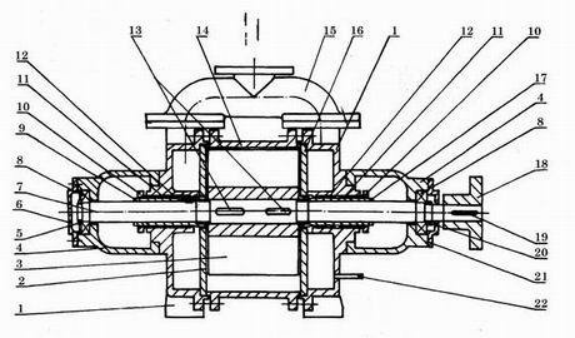
1. End cover 2. Rear suction and discharge disc 3. Impeller 4. Bearing bracket 5. Round nut 6. Rear bearing press cap 7. Shaft 8. Bearing 9. Rear shaft sleeve 10. Packing press ring 11. Packing 12. Packing press ring 13. Flat key 14. Pump body 15. Connecting pipe 16. Front suction and discharge disc 17. Front shaft sleeve 18. Coupling device 19.
Why choose us?
Changsha Zhonghlian Pump Industry Co., Ltd. was founded in 1989 and was independently established after the restructuring of Changsha Water Pump Factory. It is a comprehensive national high-tech enterprise integrating design, research and development, manufacturing, and service. The company was listed on the Hunan Provincial Equity Exchange on December 31, 2019, with the abbreviation "Zhonghlian Pump Industry" and the equity code: 600275HN. It is currently a key backbone enterprise in China's centrifugal pump industry and one of the major professional manufacturers of multi-stage pumps in the country. The headquarters is located in Changsha City, Hunan Province, a historical and cultural city in China.
Square meters of land area
100% factory pass rate
Square meters of land area
100% factory pass rate
Q
What is your typical delivery time?
A
Models in stock can be shipped the next day at the latest. All others are custom-made, with lead times generally ranging from 7 to 90 days depending on the product size and project specifics. Please contact our sales manager for details: 0731-88632200 。
Q
Do you have centrifugal pumps in stock?
A
Centrifugal pumps come in numerous models and configurations. Except for a small number of high-volume, standard models that are in stock, the vast majority are not stocked and are customized products. We need to select a pump based on your site's flow rate, head, media temperature, pH value, and installation conditions, etc., to determine the pump model and configuration before we can submit an order to the factory for production.
Q
What information should I provide when requesting a quote?
A
Generally, to obtain an accurate quotation, we recommend providing us with the following information: pump flow rate, head, on-site operating voltage and frequency, temperature, pH value, and solid particle content of the fluid being conveyed, and on-site installation conditions (horizontal or vertical installation), etc.
If you are not sure, don't worry, our business managers will assist you in determining this.
Q
What products do you mainly produce?
A
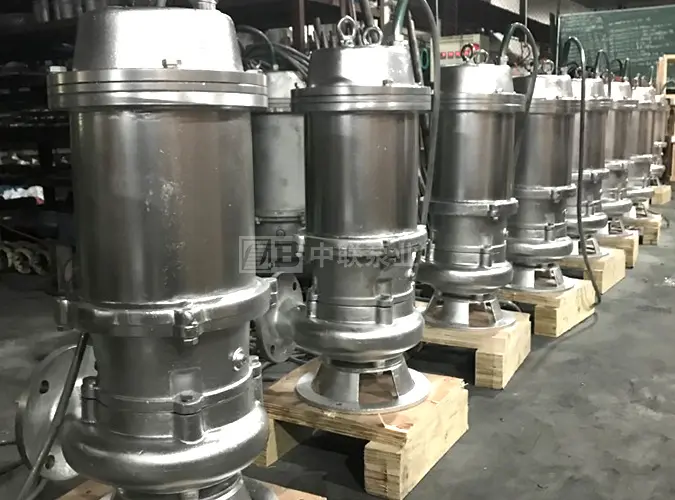
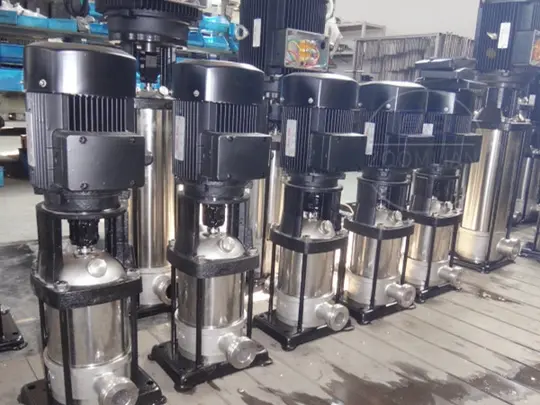
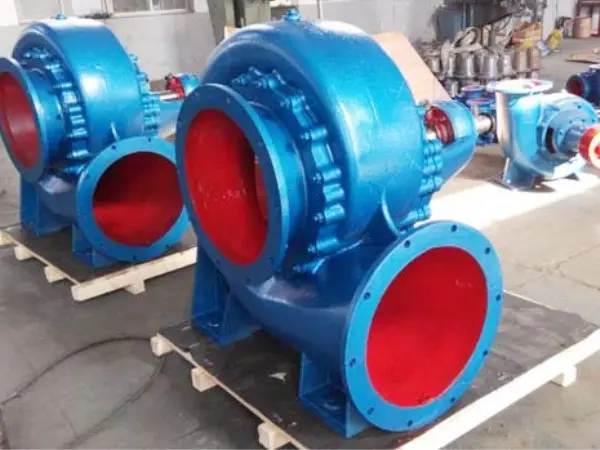
Zhonglian Pump Industry manufactures various large industrial centrifugal pumps. Main products include: self-balancing multi-stage pumps, multi-stage centrifugal pumps, single-stage centrifugal pumps, split-case pumps, chemical pumps, submersible pumps, pipeline pumps, long-shaft pumps, condensate pumps, etc.
Q
Why is it so slow to get a price quote?
A
Because centrifugal pumps are non-standard customized products with many models, the price range is also very large. Even for the same model, the price difference is also very large due to different materials and configurations. Taking the most common water pump accessory—the impeller—as an example, the price of a stainless steel impeller is several times that of a cast iron impeller. Therefore, we need to clarify the relevant information to give you an accurate price. Normally, if you provide relatively comprehensive information, we can quote within 5 minutes.
Previous Page
Next Page
Previous Page
Next Page

Product message
Contact our team promptly; we are happy to help you.
*Note: Please fill in the information accurately and keep the communication open. We will contact you as soon as possible.

Hotline:
+86 0731-88632200
Export Trade/Technical Support:
+86 153-4831-2290
Head Office Email:
zoomlian@yeah.net
No. 210, Huanbao Zhong Road, Yuhua District, Changsha City, Hunan Province, Leowoju Wisdom Valley Building B, 8th Floor
Quick Navigation


Hot Products
Online Consultation
Powered by:www.300.cn Changsha SEO