

-
Product
-
-
Service Policy
-
-
Blog
-
Join Us
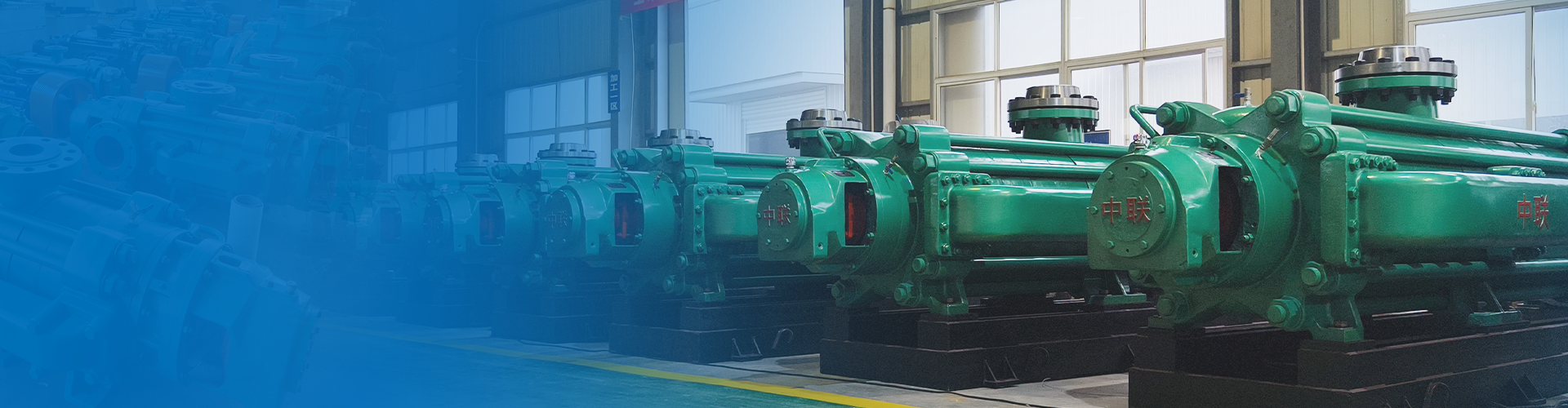
Having 26 series -312 varieties - over 1000 pump models
Focused on water pump research and development manufacturing for 36 years
Free training for operation and maintenance personnel/free installation guidance/free provision of installation drawings
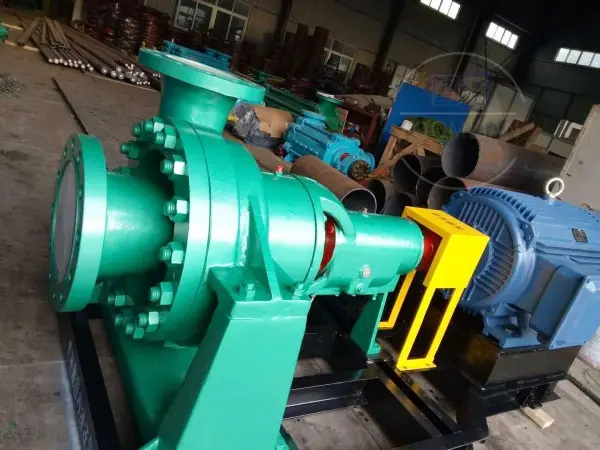


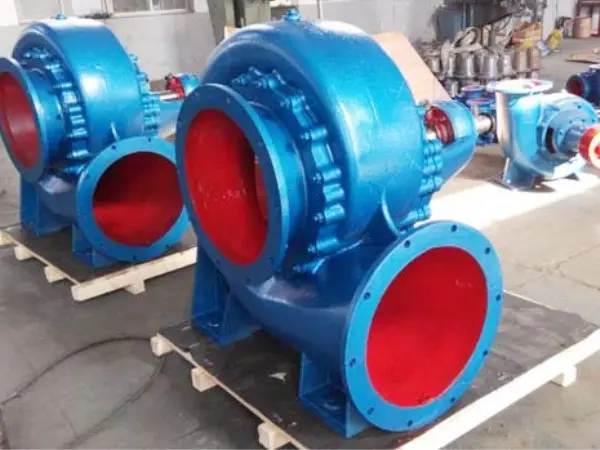
IR-type horizontal single-stage single-suction hot water pump
Flow rate: 3.75–1080 m³/h
Head: 4–128 m
Power: 0.55–160 kW
Efficiency: 23%-85%
Pump weight: 40–2100 kg
Cavitation margin: 2.0–6.0 m
Price: 0.29–32,500
The IR-type horizontal single-stage single-suction hot-water centrifugal pump is suitable for industrial and municipal water supply and drainage applications. It can also be used for agricultural irrigation and drainage, as well as for conveying clean water or other liquids with physical and chemical properties similar to those of clean water, provided that the temperature does not exceed 150℃.
Hotline:
Single-stage pump
Horizontal Single-Stage Fire Pump
Product Overview
The IR-type horizontal single-stage single-suction hot-water pump is an energy-saving pump jointly designed nationwide. It represents an upgraded version of the BA, BL, and other single-stage centrifugal pumps. Its advantages include: a reasonably optimized hydraulic performance layout across the entire series, a wide range of options for users, and convenient maintenance; its efficiency and suction lift both reach the international average advanced level. Horizontal single-suction hot-water pump. Single-stage pump Suitable for industrial and municipal water supply and drainage, as well as for agricultural irrigation and drainage, and for conveying clean water or other liquids with physicochemical properties similar to those of clean water, with a temperature not exceeding 150℃.

Product Parameters
Performance Range and Model Designations of IR-Type Horizontal Single-Stage Single-Suction Hot-Water Centrifugal Pumps
IR-type horizontal Single-stage pump Simple structure, reliable performance, compact size, lightweight, excellent cavitation resistance, low power consumption, and easy to use and maintain.
The IR horizontal single-stage pump boasts wide versatility and comes in a total of 140 specifications across the entire series, yet it uses only four different types of shafts. Within the same specification, the shaft, bearings, and shaft seals are all interchangeable. Moreover, the entire series of pumps features just four different types of suspensions.
The pump speed is available in two options: 2900 and 1450 revolutions per minute.
Performance as follows: 2900 rpm, 1450 rpm
Maximum flow rate: 240 m³/min, 400 m³/min
Maximum total head: 125 meters, 55 meters
Maximum rotational speed: 3,500 rpm (when used with a 60 Hz power supply, the impeller diameter is reduced).
Maximum operating temperature: 150℃
The suction line pressure is allowed up to 0.3 MPa, while the pump’s maximum operating pressure is 1.6 MPa.

Structural features of the IR-type horizontal single-stage single-suction hot-water centrifugal pump:

1 Pump body, 2 Pump cover, 3 Impeller 1. 4-axis, 2. 5-sealing rings, 3. 6-impeller nut, 4. Locking washer, 5. Shaft sleeve, 6. Packing gland, 7. Packing ring, 8. Packing, 9. Suspension bearing assembly.
The IR-type horizontal single-stage centrifugal pump is designed according to the performance and dimensions specified in the national standard ISO 2858. It mainly consists of the pump body (1), pump cover (2), impeller (3), shaft (4), sealing ring (5), shaft sleeve, and suspension bearing assembly (12), among other components.
The IR-type horizontal single-stage centrifugal pump features a back-open design, allowing the suction and discharge pipelines to remain connected without being dismantled when removing the pump cover and impeller. The suspension is equipped with two ball bearings, which are lubricated using machine oil or grease. The pump is directly driven by an electric motor via an elastic coupling. The volute, base, inlet flange, and outlet flange are all cast as a single integral unit.
The pump body and cover of the IR-type single-stage hot-water pump are split at the back side of the impeller—this is commonly referred to as the rear-opening structure. Its advantage lies in its convenient maintenance: during inspection and repair, the pump body, suction piping, discharge piping, and motor remain stationary. All that’s required is to remove the intermediate coupling component of the extended coupling, after which the rotor assembly can be easily withdrawn for inspection and maintenance.
The pump casing—comprising the pump body and pump cover—forms the pump’s working chamber. The rotor consists of components such as the impeller, shaft, and rolling bearings. The suspension bearing assembly supports the pump’s rotor components, while the rolling bearings bear both the radial and axial forces exerted on the pump.
To balance the axial force of the pump, most pumps are equipped with sealing rings both at the front and rear of the impeller, and also feature balance holes on the rear cover plate of the impeller. However, since some pumps have relatively small axial forces, their impellers do not have sealing rings or balance holes on the back side.
The pump’s axial sealing ring consists of a packing gland (9), a packing ring (10), and packing material (11) to prevent air intake or excessive water leakage. If the pump impeller is balanced, the cavity equipped with soft packing is connected to the impeller’s suction inlet. When the liquid at the impeller inlet is under vacuum, air can easily enter along the shaft sleeve surface. Therefore, a packing ring is installed in the packing chamber, and pressure water from the pump chamber is directed through a small hole in the pump cover to the packing ring for effective sealing. If the pump impeller does not have balancing holes, since the liquid pressure on the back side of the impeller exceeds atmospheric pressure, there will be no air leakage issue, and thus a packing ring is not required.
To prevent shaft wear, a shaft sleeve is installed at the point where the shaft passes through the stuffing box. An O-ring seal is fitted between the shaft sleeve and the shaft to prevent air or water leakage along the mating surfaces.
The pump is driven via an extended flexible coupling connected to the electric motor. When viewed from the drive end, the pump rotates clockwise.
Installation Instructions for IR-Type Horizontal Single-Stage Single-Suction Hot Water Centrifugal Pump:
I. Assembly and Disassembly
Before assembly, the pump’s components should first be inspected for any defects that might affect assembly, and then thoroughly cleaned before proceeding with assembly.
1. You can pre-tighten the connecting bolts, threaded plugs, and other components onto their respective parts.
2. You can pre-place the O-ring, paper gasket, felt, and other components onto their respective parts.
3. You can pre-assemble the sealing ring, packing, packing ring, and packing gland into the pump cover in sequence.
4. Install the rolling bearing onto the shaft, then insert it into the suspension. Next, close the press cover to securely clamp the rolling bearing, and finally, slide the connecting bolts onto the shaft.
5. First, slide the shaft assembly onto the shaft; then, attach the pump cover to the suspension. Next, install and tighten the impeller, stop washer, impeller nut, and other components. Finally, assemble the above components into the pump body and tighten the connecting bolts on both the pump body and the pump cover.
During the assembly process described above, certain small components—such as flat keys, oil seals, water-sealing bushings, and O-rings for shaft sleeves—can easily be overlooked or installed in the wrong sequence. Special attention should be paid to these parts.
The pump disassembly sequence can basically be carried out in the reverse order of the assembly sequence.
II. Installation
The quality of pump installation significantly affects the pump’s operation and service life; therefore, installation and alignment must be carried out with great care. Refer to the pump’s external dimensions and installation dimensions.
1. Installation and Calibration:
1) Remove grease and dirt from the base, then place the base onto the foundation.
2) Use a level to check the horizontality of the base; wedge irons may be used for leveling if necessary.
3) Pour cement into the base and anchor bolt holes.
4) After the cement has fully dried, check whether the base and anchor bolt holes are loose. Once they are found to be secure, tighten the anchor bolts and recheck the levelness.
5) Clean the supporting surface of the base, as well as the surfaces where the pump feet and motor feet will be mounted, then install the water tank and motor onto the base.
6) A certain gap should be maintained between the couplings. Check whether the centerlines of the pump shaft and the motor shaft are aligned; thin shims can be used to adjust them for concentricity.
The difference between the upper and lower, as well as the left and right, outer diameters of the coupling shall not exceed 0.1 mm. The maximum and minimum differences in the end-face clearance around the circumference of the two couplings shall not exceed 0.3 mm.
2. Installation Instructions:
1) The installation height of the centrifugal pump, as well as the length, diameter, and flow velocity of the pipeline, should conform to the calculations and strive to minimize unnecessary losses.
2) When transporting over long distances, a larger pipe diameter should be used. The pump’s pipeline should have its own supports, and the weight of the pipeline must not be allowed to bear on the pump, to avoid damaging the pump.
3) If a check valve is installed on the discharge pipeline, it should be positioned outside the gate valve.
III. Starting, Stopping, and Operation
1. Start:
1) Before connecting the machine, ensure that the motor’s rotation direction is correct and that the pump operates smoothly.
2) Close the idle valves on the discharge pipeline.
3) Fill the pump with water, or use a vacuum pump to prime it.
4) Once the power is turned on and the pump reaches its normal speed, gradually open the gate valve on the discharge pipeline and adjust it to the desired operating conditions. Under the condition that the gate valve on the discharge pipeline remains closed, the pump must not run continuously for more than 3 minutes.
2. Stop:
1) Gradually close the gate valve on the discharge pipeline and disconnect the power supply.
2) If the ambient temperature falls below 0℃, the water inside the pump should be drained to prevent freezing and cracking.
3) If the pump is to be discontinued for an extended period, it should be disassembled, cleaned, lubricated, and then properly packaged and stored.
3. Operation:
1) During driving and operation, it is essential to closely monitor instrument readings, bearing temperature rise, packing leakage and heating, as well as vibrations and unusual noises, to ensure everything is normal. If any abnormalities are detected, they should be addressed immediately.
2) The maximum bearing temperature shall not exceed 80℃, and the bearing temperature shall not exceed the ambient temperature by more than 40℃.
3) The packing is normal; any leakage should be slight and uniform.
4) The bearing oil level should be maintained at the normal position—neither too high nor too low. If the oil level is too low, lubricating oil should be replenished promptly.
5) If the clearance between the sealing ring and the impeller mating area is excessively worn, the sealing ring should be replaced with a new one.
Friendly reminder: For performance parameters, please refer directly to the pump selection page.
Why choose us?
Changsha Zhonghlian Pump Industry Co., Ltd. was founded in 1989 and was independently established after the restructuring of Changsha Water Pump Factory. It is a comprehensive national high-tech enterprise integrating design, research and development, manufacturing, and service. The company was listed on the Hunan Provincial Equity Exchange on December 31, 2019, with the abbreviation "Zhonghlian Pump Industry" and the equity code: 600275HN. It is currently a key backbone enterprise in China's centrifugal pump industry and one of the major professional manufacturers of multi-stage pumps in the country. The headquarters is located in Changsha City, Hunan Province, a historical and cultural city in China.
Square meters of land area
100% factory pass rate
Square meters of land area
100% factory pass rate
Q
What is your typical delivery time?
A
Models in stock can be shipped the next day at the latest. All others are custom-made, with lead times generally ranging from 7 to 90 days depending on the product size and project specifics. Please contact our sales manager for details: 0731-88632200 。
Q
Do you have centrifugal pumps in stock?
A
Centrifugal pumps come in numerous models and configurations. Except for a small number of high-volume, standard models that are in stock, the vast majority are not stocked and are customized products. We need to select a pump based on your site's flow rate, head, media temperature, pH value, and installation conditions, etc., to determine the pump model and configuration before we can submit an order to the factory for production.
Q
What information should I provide when requesting a quote?
A
Generally, to obtain an accurate quotation, we recommend providing us with the following information: pump flow rate, head, on-site operating voltage and frequency, temperature, pH value, and solid particle content of the fluid being conveyed, and on-site installation conditions (horizontal or vertical installation), etc.
If you are not sure, don't worry, our business managers will assist you in determining this.
Q
What products do you mainly produce?
A
Zhonglian Pump Industry manufactures various large industrial centrifugal pumps. Main products include: self-balancing multi-stage pumps, multi-stage centrifugal pumps, single-stage centrifugal pumps, split-case pumps, chemical pumps, submersible pumps, pipeline pumps, long-shaft pumps, condensate pumps, etc.
Q
Why is it so slow to get a price quote?
A
Because centrifugal pumps are non-standard customized products with many models, the price range is also very large. Even for the same model, the price difference is also very large due to different materials and configurations. Taking the most common water pump accessory—the impeller—as an example, the price of a stainless steel impeller is several times that of a cast iron impeller. Therefore, we need to clarify the relevant information to give you an accurate price. Normally, if you provide relatively comprehensive information, we can quote within 5 minutes.

Product message
Contact our team promptly; we are happy to help you.
*Note: Please fill in the information accurately and keep the communication open. We will contact you as soon as possible.

Hotline:
+86 0731-88632200
Export Trade/Technical Support:
+86 153-4831-2290
Head Office Email:
zoomlian@yeah.net
No. 210, Huanbao Zhong Road, Yuhua District, Changsha City, Hunan Province, Leowoju Wisdom Valley Building B, 8th Floor
Quick Navigation


Hot Products
Online Consultation
Powered by:www.300.cn Changsha SEO