

-
Product
-
-
Service Policy
-
-
Blog
-
Join Us
Having 26 series -312 varieties - over 1000 pump models
Focused on water pump research and development manufacturing for 36 years
Free training for operation and maintenance personnel/free installation guidance/free provision of installation drawings
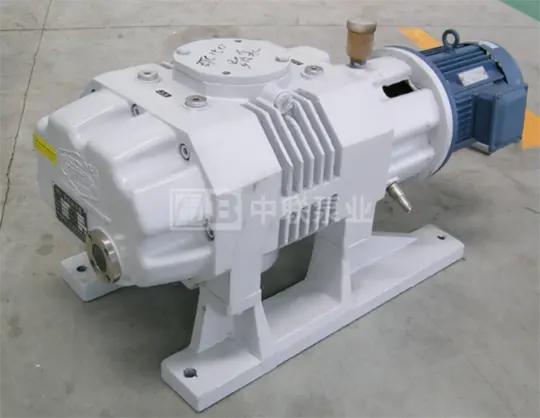
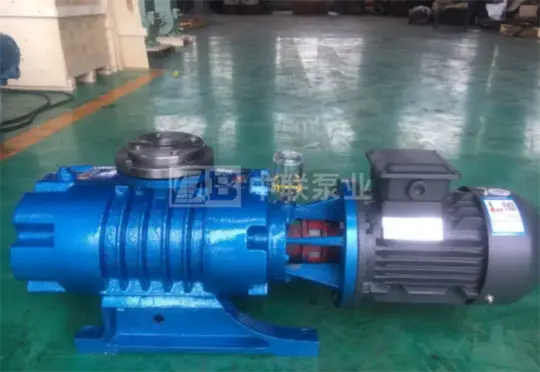
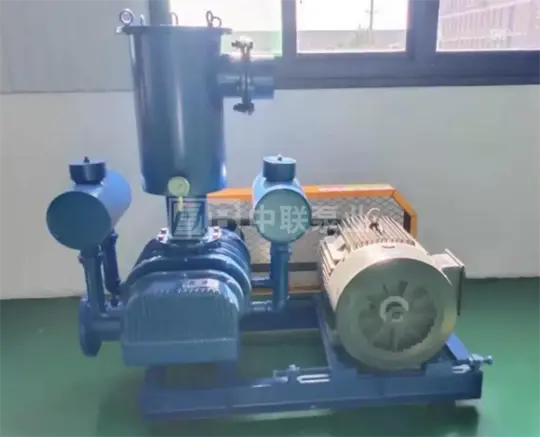
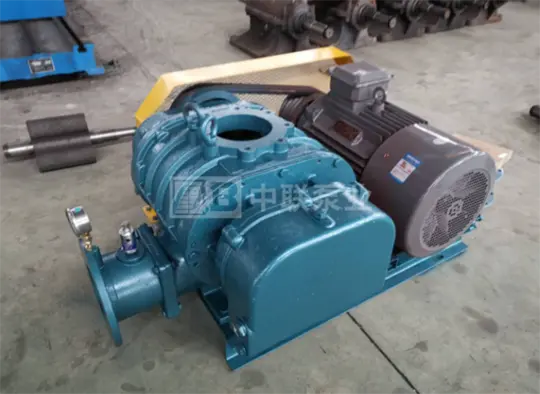
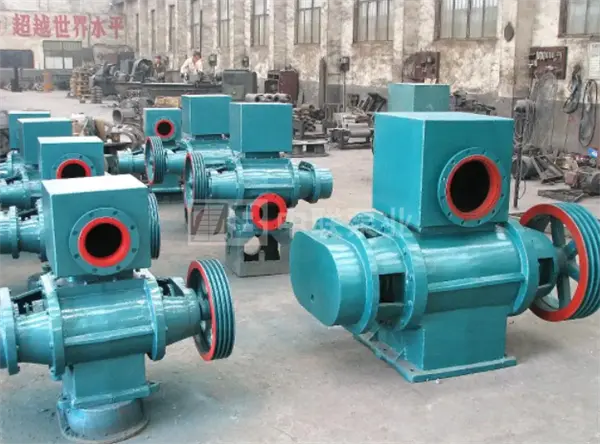
ZBK Roots Vacuum Pump
Price: 7,800–79,800
Power: 7.5-110kw
Rotational speed: 360-550r/imin
Pump weight: 440-3430kg
Vacuum degree: 0.053KPa
Pumping rate: 6-75 m³/min
The ZBK series Roots vacuum pumps feature distinct advantages such as high efficiency, compact size, light weight, and energy savings. They are widely used in industries including papermaking, food processing, chemical engineering, and apparel for vacuum dehydration, as well as in the cigarette industry for smoke extraction. The pump can handle dry air, moist air, or gas-water mixtures as the medium; however, the medium must not contain any solid particles.
Hotline:
Vacuum pump
roots vacuum pump
Horizontal Single-Stage Fire Pump
ZBK Roots vacuum pumps
Product Parameters
Suction Characteristics and Power Characteristics of ZBK-Type Roots Vacuum Pump Units
When selecting a Roots vacuum unit from this series, the first step is to determine the required operating capacity of the vacuum system being pumped—specifically, the pumping speed at the desired vacuum level—and choose the appropriate model to achieve the intended performance. However, some users may not have a sufficient grasp of the system’s parameters and only know the target vacuum level required by the system, without realizing the exact pumping capacity needed at that vacuum level. In such cases, you can select the appropriate model based on the specific conditions of the vacuum system, taking into account factors such as paper grade, wire speed, machine type, and the particular application area, and referring to the operational experience of similar units already in use for comparison.
Instructions:
1. P - Vacuum degree (kPa)
2. Pumping speed (m³/h) under vacuum conditions on the V-inlet side
3. N - Actual power consumption (kW)
Working Principle of the ZBK Rotary Lobe Vacuum Pump Unit

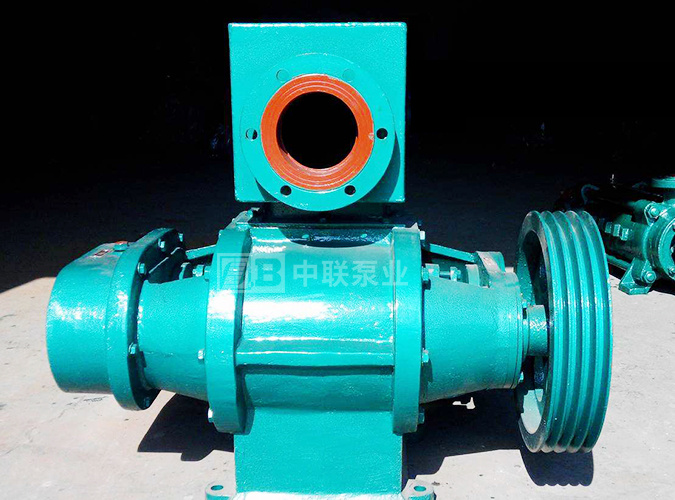
The basic models of the ZBK-type Roots vacuum pump in this series come in two types: horizontal and vertical, as shown in Figure 2.

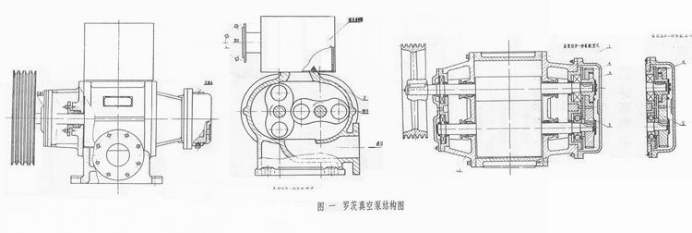
The structure of the ZBK Roots vacuum pump is shown in Figure 1. It mainly consists of two end covers 1, a pump body 5, and a pair of “8”-shaped rotors 3. There is a certain clearance between the working surfaces of these “8”-shaped rotors, and this clearance is determined by the relative positions of the two rotors. Therefore, adjusting the clearance or relative positions of the two rotors is achieved by modifying the relative positions of the synchronizing gears. The motor drives the driving rotor to rotate via a V-belt, and through the synchronizing gears, the other rotor is driven to rotate in synchronization with the first. During operation, the volume on the suction side expands while the volume on the discharge side contracts, thereby completing the pumping and exhaust process and creating a vacuum within the system. At the outlet of the pump body, there is a silencer that not only stabilizes the pressure but also provides sealing, thus enhancing the overall efficiency of the pump.
Product installation:
The ZBK Roots vacuum pump is available in two versions: one with a base plate and one without. If a user purchases the version without a base plate, they can independently prepare the base plate and motor mounting rails according to the dimensions provided in Figure 3, Figure 4, Table 2, and Table 3 for installation. The layout of the base plane shall be determined by the user based on the dimensions of the supplied base plate and motor mounting rails. Whether the motor is installed on the inlet side or the outlet side should be decided by the user according to the requirements of the process piping system. If a user purchases the version with a base plate, this must be specified in the purchase contract.
Use and Maintenance:
1. Before using the new pump, you must check whether the gear box lubricant level is appropriate. The oil level should be maintained within a range of ±2 millimeters around the oil-level mark. Regularly inspect the lubrication condition during normal operation.
2. Before starting the newly installed pump, first manually turn the pulley to rotate both rotors and confirm that there are no foreign objects inside the pump. Then, perform a brief test run by briefly pressing the start button; if no abnormalities are detected, proceed with normal startup.
3. Before starting the machine each time after shutdown for maintenance, you must first open the drain valve to remove any accumulated water before powering on, to avoid excessive starting load that could cause bending or deformation of the rotor shaft or damage to the motor.
4. After prolonged operation, the gear teeth will wear down. When the amount of wear reaches a certain threshold, the two rotors will come into contact with each other. At this point, you should loosen the bolts on the driving gear hub (see Figure 1), remove the two locating pins, and adjust the circumferential position of the gear ring. If adjusting the gear ring in one direction causes the clearance between the working surfaces of the two rotors to decrease and result in contact, you should adjust the gear ring in the opposite direction instead. Generally, the adjustment angle for the gear ring should be less than 30°. Continue adjusting until the clearances between the working surfaces of the two rotors are roughly consistent and no longer result in rotor contact. Then, re-tighten the bolts on the gear hub.
Tighten the bolts on component 6. After starting up and confirming that there are no abnormalities during operation, re-drill and re-bore the locating pin holes, then install the locking pins.
5. The bearings on the gear side are lubricated by oil bath, while the bearings on the pulley side can be lubricated with calcium-based dry grease by injecting it through the grease fitting on the bearing cover.
6. When a new pump is put into operation or new gears are replaced, the gear lubricant should be changed after about half a month of operation. Thereafter, the oil grade should be adjusted according to seasonal changes; generally, an oil with viscosity grade 30–40 is sufficient. Normally, the oil should be changed once every quarter, and care should be taken to prevent any oil leaks or seepage.
7. Since the inlet side inside the pump is under vacuum, after the packing or oil seal fails, no visible water leakage will occur during operation. However, in reality, air will leak into the pump, reducing its efficiency. Therefore, it is essential to maintain an appropriate tightness of the packing gland (or oil seal retainer), and to promptly replace any failed packing or oil seal ring.
8. If the medium being pumped is air or moist air with very little moisture content, the pump’s efficiency will be very low, manifesting as low vacuum levels and reduced pumping capacity. In such cases, a supplemental water pipe with a diameter of 1/2” to 3/4” can be installed at the pump’s inlet. By adjusting the valve, the amount of supplemental water can be regulated to enhance the pump’s performance. If the medium being pumped is not allowed to come into contact with water, another liquid can be used as the supplemental fluid. However, the supplemental fluid should not be added in excess, as excessive addition would only result in wasted energy. When using this product series on paper machines, supplemental water is generally not required—supplemental water is only needed in specific situations, such as when using a steam-water separator as shown in Figure 10 or when handling felts that contain only a small amount of moisture.
9. During operation, if the pump is functioning well but you notice only a slight lack of capacity, you can either replace it with a pump of higher capacity or increase its speed to address the issue. However, after increasing the speed, the rotational speed must not exceed 600 rpm, and sufficient power must be provided to support the increased speed.
Performance Parameters of ZBK Rotary Lobe Vacuum Pump Units
Model | ZBK11B | ZBK13 | ZBK15A | ZBK16 | ZBK16A | ZBK17B | ZBK17 | ZBK18A | ZBK18B | ZBK18 | ZBK18C |
Maximum pumping speed (m³/s) 3 /min) | 9 | 6 | 10 | 15 | 20 | 25 | 30 | 40 | 50 | 60 | 75 |
Rotational speed (r) 3 /min) | 400 | 400 | 450 | 400 | 550 | 340 | 400 | 360 | 460 | 550 | 550 |
Use a vacuum pump (Pa) | 53.3 × 10 3 (Equivalent to 400 millimeters of mercury) | ||||||||||
Inlet and outlet diameters (mm) | 150 | 125 | 150 | 200 | 200 | 250 | 250 | 300 | 300 | 300 | 300 |
Motor power (kW) | 11KW | 7.5KW | 15KW | 22KW | 30KW | 37KW | 45KW | 55KW | 75KW | 90KW | 110KW |
Weight (kg) | 600 | 440 | 540 | 940 | 940 | 1616 | 1616 | 2865 | 2865 | 2865 | 3430 |
External dimensions | 1074×580×903 | 894×580×832 | 1014×580×902 | 1040*755*1077 | 1480*875*1300 | 2205×2934×2190 | 2980*2964*2190 | ||||
Friendly reminder: For more performance parameters of the ZBK Roots vacuum pump, please click → [Pump Selection] page to view.
Why choose us?
Changsha Zhonghlian Pump Industry Co., Ltd. was founded in 1989 and was independently established after the restructuring of Changsha Water Pump Factory. It is a comprehensive national high-tech enterprise integrating design, research and development, manufacturing, and service. The company was listed on the Hunan Provincial Equity Exchange on December 31, 2019, with the abbreviation "Zhonghlian Pump Industry" and the equity code: 600275HN. It is currently a key backbone enterprise in China's centrifugal pump industry and one of the major professional manufacturers of multi-stage pumps in the country. The headquarters is located in Changsha City, Hunan Province, a historical and cultural city in China.
Square meters of land area
100% factory pass rate
Square meters of land area
100% factory pass rate
Q
What is your typical delivery time?
A
Models in stock can be shipped the next day at the latest. All others are custom-made, with lead times generally ranging from 7 to 90 days depending on the product size and project specifics. Please contact our sales manager for details: 0731-88632200 。
Q
Do you have centrifugal pumps in stock?
A
Centrifugal pumps come in numerous models and configurations. Except for a small number of high-volume, standard models that are in stock, the vast majority are not stocked and are customized products. We need to select a pump based on your site's flow rate, head, media temperature, pH value, and installation conditions, etc., to determine the pump model and configuration before we can submit an order to the factory for production.
Q
What information should I provide when requesting a quote?
A
Generally, to obtain an accurate quotation, we recommend providing us with the following information: pump flow rate, head, on-site operating voltage and frequency, temperature, pH value, and solid particle content of the fluid being conveyed, and on-site installation conditions (horizontal or vertical installation), etc.
If you are not sure, don't worry, our business managers will assist you in determining this.
Q
What products do you mainly produce?
A
Zhonglian Pump Industry manufactures various large industrial centrifugal pumps. Main products include: self-balancing multi-stage pumps, multi-stage centrifugal pumps, single-stage centrifugal pumps, split-case pumps, chemical pumps, submersible pumps, pipeline pumps, long-shaft pumps, condensate pumps, etc.
Q
Why is it so slow to get a price quote?
A
Because centrifugal pumps are non-standard customized products with many models, the price range is also very large. Even for the same model, the price difference is also very large due to different materials and configurations. Taking the most common water pump accessory—the impeller—as an example, the price of a stainless steel impeller is several times that of a cast iron impeller. Therefore, we need to clarify the relevant information to give you an accurate price. Normally, if you provide relatively comprehensive information, we can quote within 5 minutes.
Previous Page
Next Page
Previous Page
Next Page

Product message
Contact our team promptly; we are happy to help you.
*Note: Please fill in the information accurately and keep the communication open. We will contact you as soon as possible.

Hotline:
+86 0731-88632200
Export Trade/Technical Support:
+86 153-4831-2290
Head Office Email:
zoomlian@yeah.net
No. 210, Huanbao Zhong Road, Yuhua District, Changsha City, Hunan Province, Leowoju Wisdom Valley Building B, 8th Floor
Quick Navigation


Hot Products
Online Consultation
Powered by:www.300.cn Changsha SEO