

-
Product
-
-
Service Policy
-
-
Blog
-
Join Us
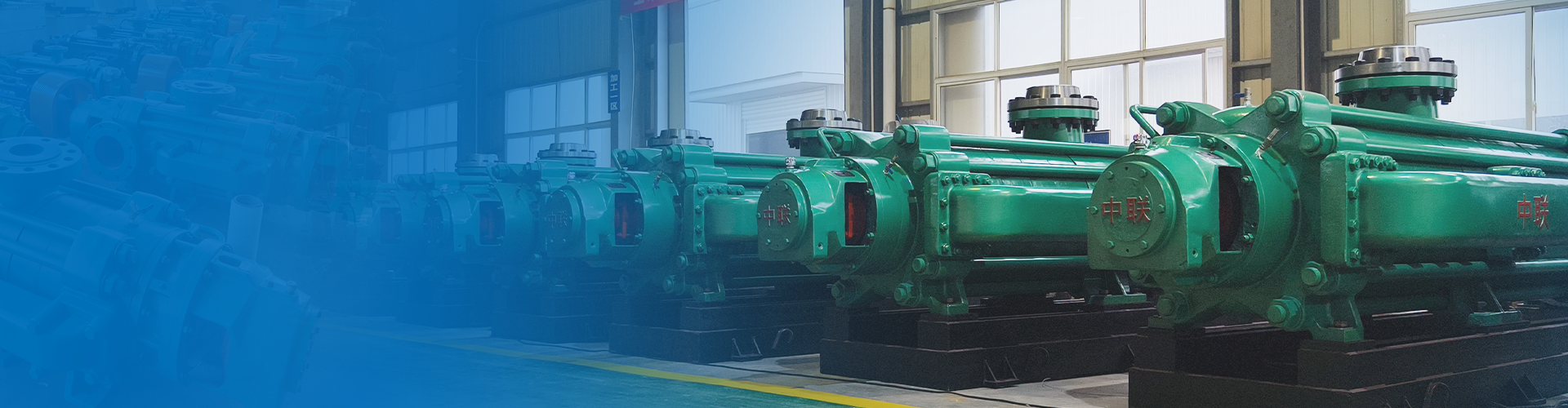
Having 26 series -312 varieties - over 1000 pump models
Focused on water pump research and development manufacturing for 36 years
Free training for operation and maintenance personnel/free installation guidance/free provision of installation drawings
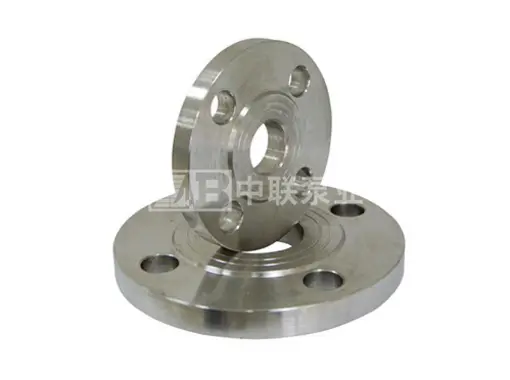
Flange
A flange is a disc-shaped component, also known as a flanged hub or flange lug. It’s most commonly used in piping systems as a component for connecting pipes to one another. Flanges are always used in pairs. Flange joints are an extremely common and widely applicable type of component in engineering design. Price: 5–100 yuan per piece.
Hotline:
Genuine accessories
Horizontal Single-Stage Fire Pump
Accessory Details
What is a flange?
Flange: A flange is a disc-shaped component, also known as a flanged hub or flange lug. It is most commonly used in piping systems as a component for connecting pipes to one another. Flanges are always used in pairs. Flange joints are among the most widely used and extensively applied components in engineering design. They are essential parts in piping design and in pipe fittings and valves, and are also indispensable components in equipment and equipment parts (such as manholes, sight glasses, and liquid-level indicators). Moreover, flange joints are frequently employed in other specialized fields, including industrial furnaces, thermal engineering, water supply and drainage, heating, ventilation, and automatic control systems.
As a leading flange manufacturer, Zhonglian Pump Industry specializes in providing stainless steel flanges, forged carbon steel flange covers, forged high-pressure flanges, 304 flanges, forged flange plates, flat-welded steel pipe flanges, and plate-type flat-welded flanges. Our flange prices are reasonable and affordable, and we offer honest and transparent quotations.
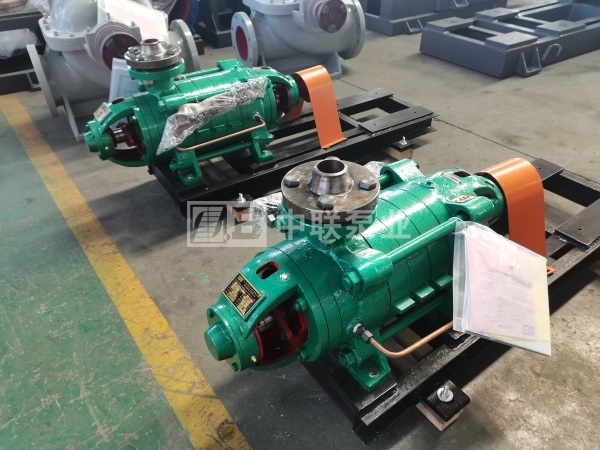
↑High-pressure flange configured for horizontal multistage centrifugal pumps↑
Flange material
Forged steel, WCB carbon steel, stainless steel, 316L, 316, 304L, 304, 321, chrome-molybdenum steel, chrome-molybdenum-vanadium steel, molybdenum-titanium, rubber-lined, fluoropolymer-lined materials
Flange Classification
Flat-welded flanges, necked flanges, butt-welded flanges, ring-type joint flanges, socket flanges, and blind flanges, etc.
Common Connection Methods for Pump Flanges
A pump flange connection involves first securing each pipe, fitting, or piece of equipment onto a pump flange. Then, a pump flange gasket is placed between the two pump flanges, and the flanges are tightened together using bolts, thereby completing the connection. Some fittings and pieces of equipment already come equipped with built-in pump flanges; these also fall under the category of pump flange connections.
1. Pump flange connection method
This is the most commonly used connection type in valves. According to the shape of the mating surface, it can be further classified into the following types:
1. Smooth type: Used for valves with low pressure. Relatively easy to machine.
2. Convex-concave type: Suitable for higher working pressures; medium-hard washers can be used.
3. Tongue-and-groove type: This design uses gaskets with significant plastic deformation and is widely used in corrosive media, offering excellent sealing performance.
4. Trapezoidal Groove Type: Uses an elliptical metal ring as a gasket, suitable for valves with a working pressure ≥ 64 kg/cm² or for high-temperature valves.
5. Lens-type: The gasket has a lens-shaped profile and is made of metal. It is used in high-pressure valves with a working pressure ≥ 100 kg/cm² or in high-temperature valves.
6. O-ring type: This is a relatively new flange connection method that has evolved with the advent of various rubber O-rings. It is an effective sealing connection method.
II. Flange Connection:
A connection method in which the valve and pipes at both ends are directly clamped together using bolts.
3. Butt Welding Connection:
Welded directly to the pipe
Pump flange installation
1. Before installing the valve, carefully verify that the model and specifications of the valve being used match those specified in the design.
2. According to the valve’s model and factory instruction manual, check and verify whether this valve is suitable for use under the required conditions.
3. When lifting the valve, the rope should be tied to the flange connection between the valve body and the valve bonnet, and must not be tied to the handwheel or valve stem, to avoid damaging the valve stem and handwheel.
4. When installing valves on horizontal pipelines, the valve stem should be oriented vertically upward; downward installation of the valve stem is not permitted.
5. When installing valves, do not use forceful methods such as pulling or tugging to align the pipe ends, as uneven stress could cause damage.
6. Rising stem gate valves should not be installed in damp underground locations to prevent the valve stem from rusting.
Matching electric actuator
Electric actuators are often used in conjunction with valves and find application in automated control systems. There are many types of electric actuators, each differing in their mode of operation: for example, angular-motion electric actuators output a torque that causes rotational movement, whereas linear-motion electric actuators output a thrust that results in linear displacement. When selecting the appropriate type of electric actuator for a particular system application, one should take into account the operational requirements of the valve.
4. Threaded Connections:
This is a simple connection method commonly used for small valves. It can be further divided into two cases:
1. Direct Sealing: The internal and external threads provide direct sealing. To ensure that the connection remains leak-free, lead paste, hemp yarn, and PTFE raw tape are often used as fillers. Among these, PTFE raw tape is becoming increasingly popular. This material boasts excellent corrosion resistance, delivers outstanding sealing performance, and is convenient to use and store. When disassembling the joint, it can be removed intact—thanks to its non-adhesive, thin film structure—which makes it far superior to lead paste and hemp yarn.
2. Indirect sealing: The tightening force applied to the threads is transmitted to the gasket located between the two mating surfaces, enabling the gasket to perform the sealing function.
V. Ferrule Connection:
The fitting connection utilizes a clamping sleeve whose connection and sealing principle is as follows: When the nut is tightened, the clamping sleeve is subjected to pressure, causing its cutting edge to bite into the outer wall of the pipe. Meanwhile, the outer conical surface of the clamping sleeve closely conforms to the inner conical surface of the fitting body under pressure, thereby reliably preventing leakage.
The advantages of this connection method are:
1. Small size, light weight, simple structure, and easy to disassemble and assemble;
2. Strong bonding strength, wide range of applications, and capable of withstanding high pressure (1000 kg/cm²), high temperature (650℃), and impact vibration.
3. A variety of materials can be selected, making it suitable for corrosion resistance.
4. Low machining accuracy requirements; easy to install at height.
The card-type connection method has already been adopted in certain small-caliber valve products in China.
6. Clamp connection:
This is a quick-connect method that requires only two bolts and is suitable for low-pressure valves that are frequently disassembled.
7. Internal Self-Tightening Connection:
All of the connection types mentioned above rely on external forces to counteract the medium pressure and achieve sealing. Next, we’ll introduce a connection type that uses the medium pressure itself to provide self-tightening action. In this design, the sealing ring is installed in the inner conical section at an angle relative to the side facing the medium. The medium pressure is transmitted to the inner cone and then passed on to the sealing ring. On the inclined conical surface at this specific angle, two components of force are generated: one component is parallel to the valve body’s central axis and points outward, while the other component presses against the inner wall of the valve body. It is this latter component—the inward-directed force—that constitutes the self-tightening force. The greater the medium pressure, the stronger the self-tightening force becomes. Therefore, this connection type is particularly well-suited for high-pressure valves. Compared with flanged connections, it saves significantly on both materials and labor costs. However, it still requires a certain amount of initial tightening force to ensure reliable performance when the internal pressure within the valve is relatively low. Valves designed based on the principle of self-tightening sealing are typically high-pressure valves. There are many other valve connection types as well—for example, some small valves that do not need to be removed are welded directly onto pipes; others, made of non-metallic materials, use socket-type connections, and so forth. Valve users should carefully consider the specific circumstances and choose the appropriate connection method accordingly.
Why choose us?
Changsha Zhonghlian Pump Industry Co., Ltd. was founded in 1989 and was independently established after the restructuring of Changsha Water Pump Factory. It is a comprehensive national high-tech enterprise integrating design, research and development, manufacturing, and service. The company was listed on the Hunan Provincial Equity Exchange on December 31, 2019, with the abbreviation "Zhonghlian Pump Industry" and the equity code: 600275HN. It is currently a key backbone enterprise in China's centrifugal pump industry and one of the major professional manufacturers of multi-stage pumps in the country. The headquarters is located in Changsha City, Hunan Province, a historical and cultural city in China.
Square meters of land area
100% factory pass rate
Square meters of land area
100% factory pass rate
Q
What is your typical delivery time?
A
Models in stock can be shipped the next day at the latest. All others are custom-made, with lead times generally ranging from 7 to 90 days depending on the product size and project specifics. Please contact our sales manager for details: 0731-88632200 。
Q
Do you have centrifugal pumps in stock?
A
Centrifugal pumps come in numerous models and configurations. Except for a small number of high-volume, standard models that are in stock, the vast majority are not stocked and are customized products. We need to select a pump based on your site's flow rate, head, media temperature, pH value, and installation conditions, etc., to determine the pump model and configuration before we can submit an order to the factory for production.
Q
What information should I provide when requesting a quote?
A
Generally, to obtain an accurate quotation, we recommend providing us with the following information: pump flow rate, head, on-site operating voltage and frequency, temperature, pH value, and solid particle content of the fluid being conveyed, and on-site installation conditions (horizontal or vertical installation), etc.
If you are not sure, don't worry, our business managers will assist you in determining this.
Q
What products do you mainly produce?
A
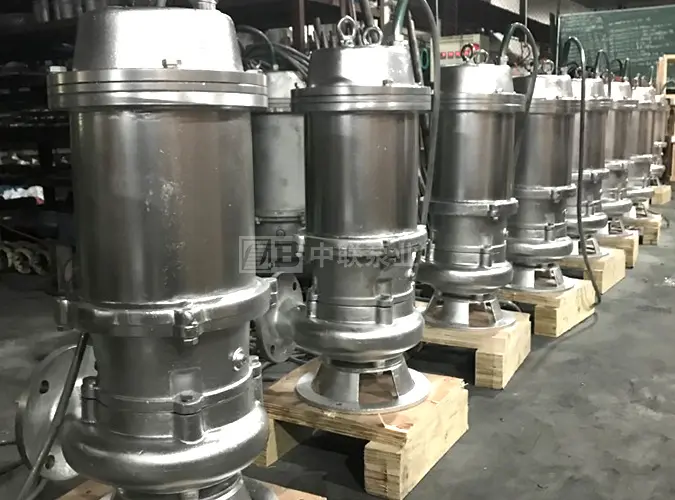
Zhonglian Pump Industry manufactures various large industrial centrifugal pumps. Main products include: self-balancing multi-stage pumps, multi-stage centrifugal pumps, single-stage centrifugal pumps, split-case pumps, chemical pumps, submersible pumps, pipeline pumps, long-shaft pumps, condensate pumps, etc.
Q
Why is it so slow to get a price quote?
A
Because centrifugal pumps are non-standard customized products with many models, the price range is also very large. Even for the same model, the price difference is also very large due to different materials and configurations. Taking the most common water pump accessory—the impeller—as an example, the price of a stainless steel impeller is several times that of a cast iron impeller. Therefore, we need to clarify the relevant information to give you an accurate price. Normally, if you provide relatively comprehensive information, we can quote within 5 minutes.

Product message
Contact our team promptly; we are happy to help you.
*Note: Please fill in the information accurately and keep the communication open. We will contact you as soon as possible.

Hotline:
+86 0731-88632200
Export Trade/Technical Support:
+86 153-4831-2290
Head Office Email:
zoomlian@yeah.net
No. 210, Huanbao Zhong Road, Yuhua District, Changsha City, Hunan Province, Leowoju Wisdom Valley Building B, 8th Floor
Quick Navigation


Hot Products
Online Consultation
Powered by:www.300.cn Changsha SEO